Performance Computer Group.
Managed the store and a team of technicians at Tampa's premier retail computer shop, while also building the Shopify site, integrating Zoho CRM, and running the digital marketing.
The problem.
A 30-year-old computer shop with deep technical chops, but a thin digital footprint and disconnected systems: the kind of business that grew up on walk-ins and word of mouth.
Customer information lived in an archaic management system and the heads of the technicians. The system had stopped receiving updates more than fifteen years earlier and was long overdue for replacement. The website didn't really sell anything; it was a phone-number-and-hours page. Most paid traffic was being spent on the wrong keywords because nobody was watching the dashboards.
Approach.
Three things at once: a Shopify storefront that actually sold things, a clean Zoho integration so customer data didn't get re-typed, and a paid acquisition setup that respected the margins of a retail computer shop (which is to say, thin).
- Shopify build with a build-configurator feel for custom PCs, plus standard parts and accessories.
- Zoho CRM integration: orders, quotes, and service tickets all flow into the same customer record.
- Google & Meta Ads with conversion tracking actually wired to Shopify checkouts, not just landing page hits.
- GA4 dashboards the owners could actually read, focused on the metrics that matter for a local retail business.
What I built.
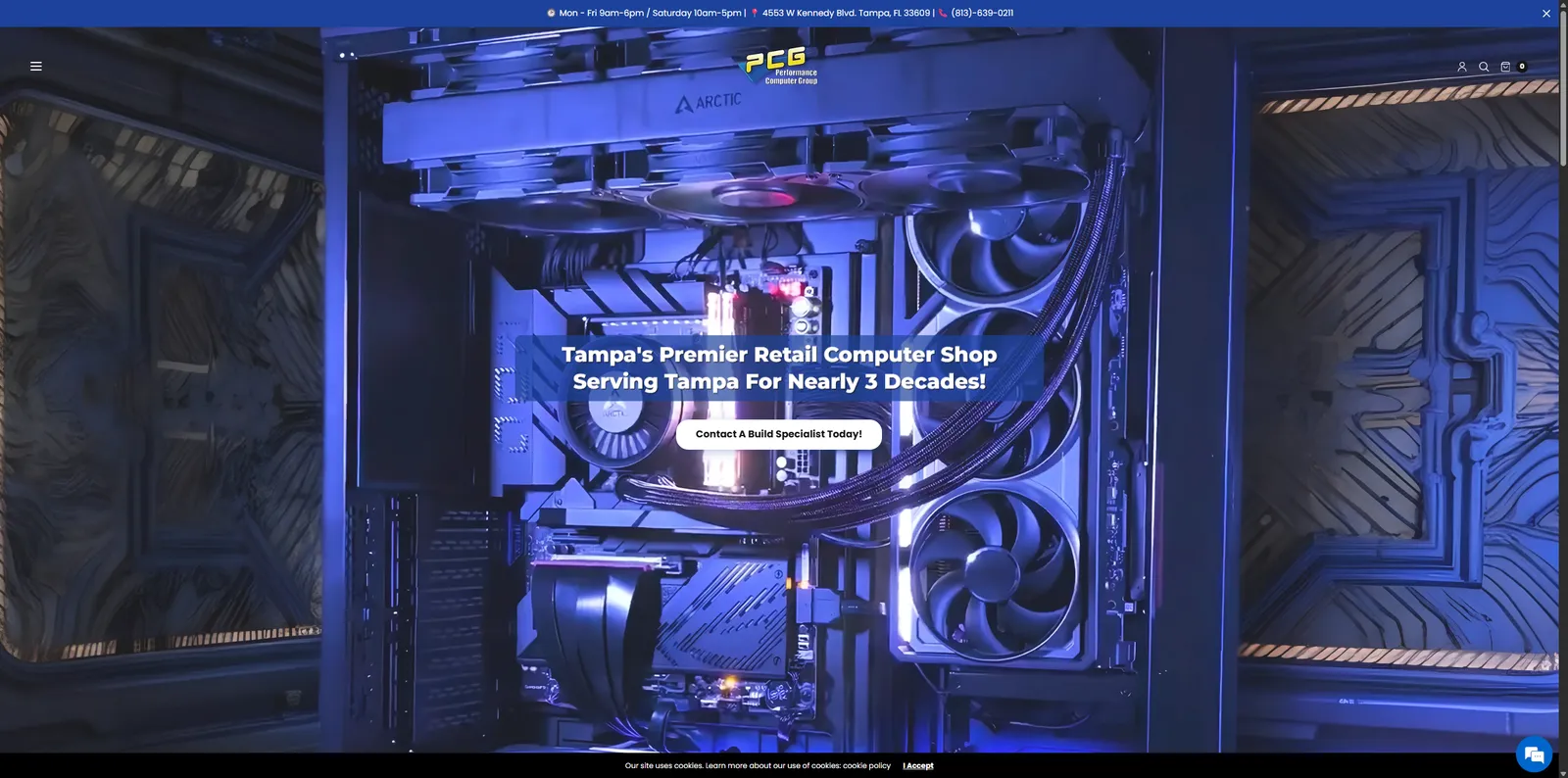
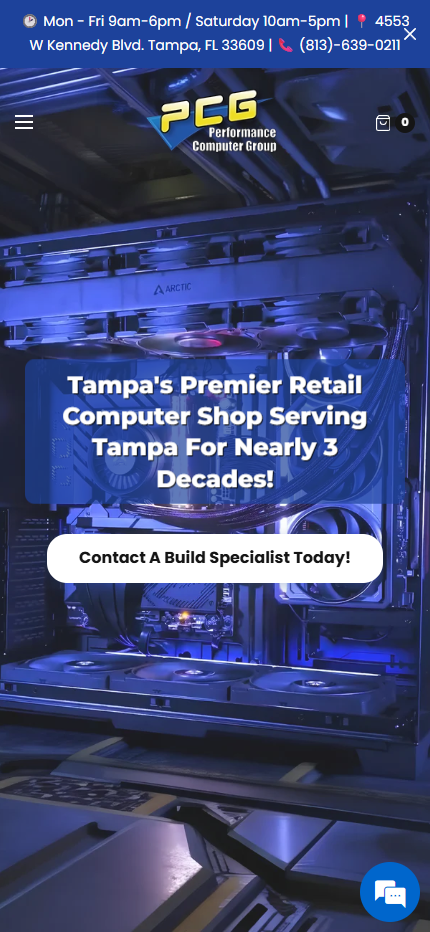
- Shopify storefront: brand-forward hero, build-specialist contact funnel, product catalog with parts & accessories.
- Zoho CRM wired to Shopify so every order, every quote, every repair ticket links to one customer record.
- Ad accounts rebuilt with proper conversion tracking, audience segmentation, and dayparting tuned to local retail hours.
- Repairs & builds: in parallel with the digital work, I worked the bench: tough troubleshooting, onsite calls for printers, servers, and NAS units, and custom water-cooled rigs built end to end.
Running the store.
The digital work happened in the margins of a bigger job: managing the store itself, with a team of technicians and staff who needed schedules, training, and somebody to hand the hardest problems to.
- Team leadership: hired and trained technicians, ran the schedule, opened and closed the store, and supervised the bench day-to-day.
- Sales lead: owned the counter, quoting custom builds, closing sales, and turning “my computer is slow” conversations into the right fix at the right price.
- Inventory & vendors: parts ordering, supplier relationships, and stock decisions for a business where guessing wrong on inventory eats the month’s margin.
Results.
By the time I left, customers walked into a shop where their full history was already in front of the tech, not because anybody remembered them, but because the systems did. The paid acquisition spend went from "we ran some Google Ads" to a tuned, conversion-tracked program with a real cost per acquisition I could quote on demand.
What I learned.
Running repairs and the digital ops at the same shop turned out to be the best feedback loop I've had on any project. Every problem the website caused, I heard about by Tuesday afternoon when somebody called the store. Every gap in the CRM, I felt the moment I tried to look up a customer's last repair. There was about thirty feet between where I shipped a change and where I had to live with it.